When Harvard Business School's Jill Avery spoke to us at HubSpot Fellows in June, one thing that stuck with me was in her description of how she studied marketing. Her research is about how companies bring new ideas to their audiences, which includes defining, measuring, and reaching those audiences as well as creating the messages about what the company has to offer. For messages, the creative work of marketing, she takes inspiration from all sorts of places. The surprising source of inspiration, the one she referenced in conjunction with our consideration of AI vs. human creative work, is the arts. I don't really connect a painting on a wall in a museum or a filled concert hall with corporate marketing, but she does. Avery takes inspiration from the arts and from the human capacity to create and connect through appreciation of the creative act. She talked about walking through museums. From her description, you could picture it, the business types taking an afternoon in the galleries or at the movies, Don Draper-style, and returning to the office to produce something really good.
This could be why AI-enabled creative work not only is derivative to review, but is boring to produce. You're not really bringing an insight from somewhere else into your work. There's no inspiration when you're copying and pasting from what you've told your over-educated intern to produce. It's all the same, the prompt and the output and the pasting–and it's noticeably flat. In Hey, Whipple, the classic guide to making great ads, Luke Sullivan recommends a few steps to the work. The first is sort of doing what AI helps you do. Read everything you possible can about the market, the audience, the product, and the company. Get the whole brief in front of you. Another is maybe AI-helped, where you write down everything you know and every idea you have. Empty the whole tank. So far so good, for our AI friends. Then, Sullivan goes off-script: put the pencil down, close the laptop, and leave the office. Take a nap, take a walk, take a weekend: anything but think about the work. Let your subconscious churn on the work without actively thinking about it. (The best scenes in Mad Men are when Don and the team are just goofing around, while the business types get increasingly concerned—what have you come up with?) Only after sufficient subconscious rumination can you begin to produce truly good and original ideas. Admittedly, I lost track of Sullivan's steps after this. Something about advancing and honing and trimming your ideas until you channel the diabolical creative sensibility that unleashed LiMu Emu (and Doug) on the world. My point, though, is that the robots stopped being helpful early on the path.
While we're not all creating ads, Sullivan's approach in Hey Whipple is useful for any kind of knowledge work. I'm using Cal Newport's practical definition of knowledge work is: work to create an artifact of ideas that didn't exist before. It could be creating syllibi or lectures, legal briefs or arguments, or project plans and slide decks. It's all 'figure this out and tell others' work. Most usefully, Sullivan outlines a set of discrete stages and sets of tasks that vary per stage. You can see the office supplies changing: first, you're highlighting, then you're writing with pen, finally, you're editing with your sharp red pencil. If the tasks of the whole job are the same, a series of prompts and readings or a series of prompts and copyings and pastings, then it's little wonder that inspiration is nowhere to be found. You have to know when you're done reading, when you're done emptying your first batch of ideas, and, most importantly, when it's time to ruminate. You can't let you're subconscious work freely if you're still hammering the AI intern along its tasks. Your deep consideration of the work will end with every ping from Claude that he's ready for you to click "next" or "allow" or read whatever he's assembled. While there might be apparent productivity in this, there's no inspiration.
The only productivity hack that works for me is to not do anything except for the work. If I do anything else, the momentum of replying or busywork, however useful or time-wasting, will carry me ever forward and I'll end the day not having done the work. If I do nothing, eventually my boredom becomes overwhelming and my attention turns to the important work. This is why my desktop background is gray and I keep my tabs to a minimum. By making not working boring enough, I will work just to stay interested. It's not very inspiring, but it helps me get work started. Some of the worst first drafts the world has known result from me trying in this way to be productive. I manage to get documents and decks and things from not existing to existing, but no one should ever peek at my work in this stage. Brute force doesn't produce good knowledge work. I have to have a first draft, sure, but the inspiration usually strikes after this is done. I'll revisit the slide deck the next day (usually right before I'm to present it) and immediately set to work changing everything (usually while muttering how dumb the guy who made the deck must be).
To be inspired, you have to close the laptop and go somewhere else. You need to sit in the movie theater or walk in the trees or stare at the ocean. Inspiration works from whatever you've read (step 1: read it all) and fires up when you go away from the places you regularly inhabit and the things you normally do. Inspiration is about finding something other, new, and outside, and then bringing it back to your usual environs.
After the flame is lit, you need to work like hell to get the idea right and clear and convincing. You need to edit away everything that's not the idea and doesn't help your audience consider it. You need to focus relentless and deeply and for longer than you have scheduled to get it right. But you can't force the striking of the match. There's no hack for it.
Reading
 Why Is Everyone In Tech So Sad?
A lot of people seem to be realizing that knowledge work is mostly pointless. AI might give us the pleasure of finding out what happens if an entire class of workers loses faith in their careers.
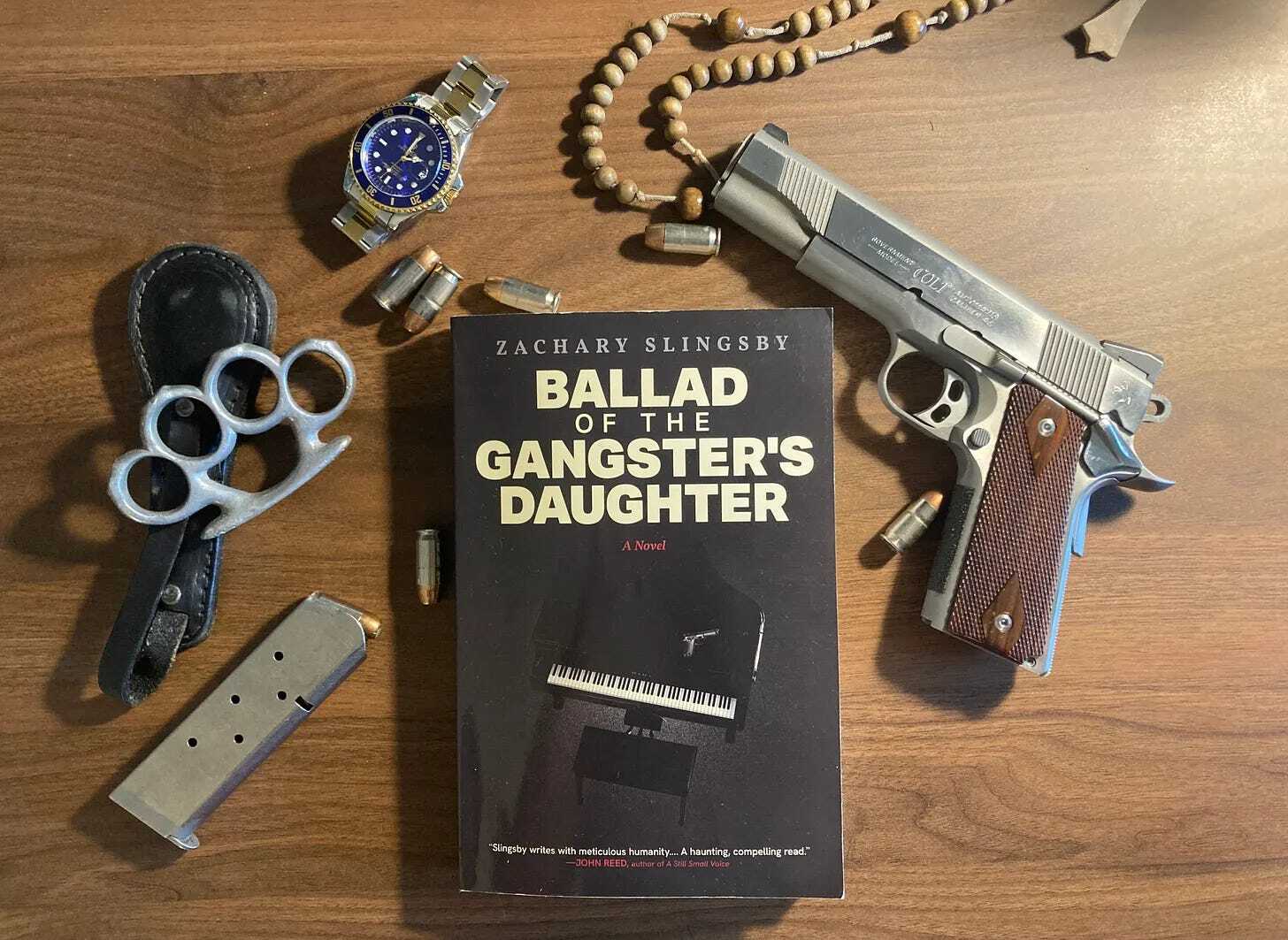
 Ballad of the Gangster's Daughter
A book review
 The Writer and the Sea
A Reverie