In Arthur Brooks's recent podcast about leisure, he talked about taking it seriously. We don't relax well because we don't relax purposefully, we don't devote ourselves to it. We're either all-on, for professional work and life logistics, or we're all-off, for sitting on the beach or Netflixing an evening away. The podcast initially struck me as classic "type A": the kind of people who want to plan to the nth degree a vacation, in order to see everything. While Brooks certainly tends in that direction, I think he was advising something different: a true understanding of leisure.I thought a lot about leisure when I read Indestractable by Nir Eyal. He posits that traction is an alignment of our time and focus towards what matters and then provides a variety of techniques to avoid distraction. While the techniques are mostly wise and mostly aspirations of mine (no phone evenings and days; focused work sessions; being fully present with others), the analysis of what matters and the aims of his concept of "traction" struck me as a bit shallow. Sure, we should all get behind not bringing our devices into our bedrooms, but is a lifetime a thing to be optimized by time-boxing techniques? Is merely turning off notifications enough to make us better people? Eyal paid some attention to values: if you say that you want to be a good parent and don't spend time with your kids, then we know what your values are; if you say you want to practice a religion, then you should show up for worship. But this seems to me to flatten everything about life into a thing that we do. Leisure, that category of time spent in a non-productive orientation, should be about something more.
The book to understand leisure is Joseph Pieper's Leisure, the Basis of Culture. Full of wisdom, two practical observations stood out from my notes. First, a reason that we too often get leisure wrong, "leisure cannot be achieved at all when it is sought as a means to an end." We usually define our leisure instrumentally, as in going on vacation from work in order to get better at work or reading a book to get better at work. This corrupts it. Eyal defining time spent with kids instrumentally, to fulfill a value of being a good parent, strikes that corrupting note. While parenting is something you do, and can do well in focused times, it's not merely a means to an end. Second, leisure is connected to the deepest part of our humanity, those things which are not in the practical sense useful but in the ultimate sense are things that alight the divine spark that connects us to the universal. Pieper again, "leisure embraces everything which, without being merely useful, is an essential part of a full human existence." Brooks translates this into a wise set of aims for leisure: art, contemplation, deep connection with others, and learning. When he tells us to be purposeful, he doesn't mean opportunistically tuning all of life to professional advancement, he means taking a long Sunday stroll in nature is an end in itself.
After reading both, I took more apps of my phone and printed some weekly schedules to time-box a bit more. But more importantly, I left my phone at home and went out, untracked, to the mountains.
Reading
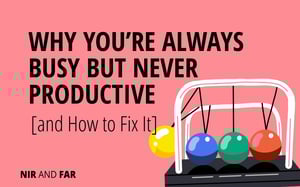 Why You're Always Busy but Never Productive
Most of us don’t think about how we spend our professional time—we just try and keep up. But the secret to working smarter (not harder) lies in managing our most precious resource.
 Stop Interrupting!
The average American is being interrupted once every seven minutes throughout the day, making it impossible to form a single complex thought.
 None the Wiser
Wisdom is different from knowledge because it involves understanding context and making good decisions despite uncertainty. It grows from real experience and emotional pain, not just data or intelligence. Unlike humans, AI lacks true wisdom because it cannot suffer or grasp complex moral values.